Race-2-Ride & Pony Club: A Partnership for Safety and Welfare
The Strategic Alignment
As ex-racehorses (OTT) become increasingly common in Pony Club programs, there is a unique opportunity to provide these riders with the specialised, evidence-based tools they need to succeed.
Addressing the "Strength Gap"
Most second-career horse owners, particularly youth and amateur riders, cannot rely on physical strength as a primary tool for handling.
-
The Demographic Reality: OTT horses are often affordable and accessible, but they are rarely "beginner-friendly" without specific retraining.
-
The Race-2-Ride Solution: Our curriculum provides non-strength-based training methods grounded in learning theory, specifically designed for the demographic that makes up the heart of Pony Club.
-
Safety First: By providing riders with clear, science-based communication tools, we significantly reduce the risk of behavioural escalations and improve rider safety.
How the Race-2-Ride Passport Works
The Training Passport is a lifetime digital support system that follows the horse through every ownership change.
-
Comprehensive Video Modules: From foundations to advanced training, accessible 24/7.
-
Live Expert Support: Weekly Q&A sessions and video analysis with Dr Fenner and regional trainers.
-
Crisis Intervention: Support is available if welfare or behavioural concerns arise, ensuring the horse stays in a safe environment.
-
Lifetime Continuity: Unlike 6-month retraining grants, this support remains with the horse for their entire life.
Founder Credentials
The program is led by Dr Kate Fenner, ensuring the highest level of professional and scientific credibility for PCA members :
-
PhD in Horse Behaviour and Training (University of Sydney).
-
Honorary President, International Society for Equitation Science (ISES).
-
Board Member, Pony Club Australia.
-
Founder of Kandoo Equine, with an existing platform of 1,000+ active members.
Apply for the Pony Club Founding Member Scholarship
We are looking for 20 dedicated Pony Club riders to join Race-2-Ride as Founding Member Scholars. This scholarship provides full, lifetime access to the Training Passport at no cost, in exchange for your role as a Founding Ambassador, sharing your horse's progress and providing practical case-study feedback to help us shape the program for future riders.
Who Should Apply?
-
The Right Horse: You currently own or lease an off-the-track Thoroughbred or Standardbred.
-
The Right Mindset: You are committed to using evidence-based, non-strength-based training methods to improve your horse’s welfare and your own safety.
-
The Commitment: You are willing to engage with the platform regularly and provide the data needed to track you and your horse's progress over a 3-6 month period.
Scholarship Requirements: To maintain your scholarship status and help us demonstrate the program's impact, scholars agree to:
-
Initial Assessment: Complete a baseline behaviour and temperament survey (E-BARQ) upon enrollment.
-
Active Participation: Complete at least one training module per month for the first six months.
-
Data Contribution: Provide brief quarterly updates on your horse’s progress and participate in three short surveys over the 12-month period.
-
Video Feedback (Optional but encouraged): Submit video clips for analysis to help us refine the curriculum for future riders.

Apply for a Scholarship
We are looking for 20 dedicated Pony Club riders to join the Race-2-Ride Global Pilot as Founding Member Scholars.
About the Race-2-Ride Training Passport
A National Framework for Racehorse Transitioning
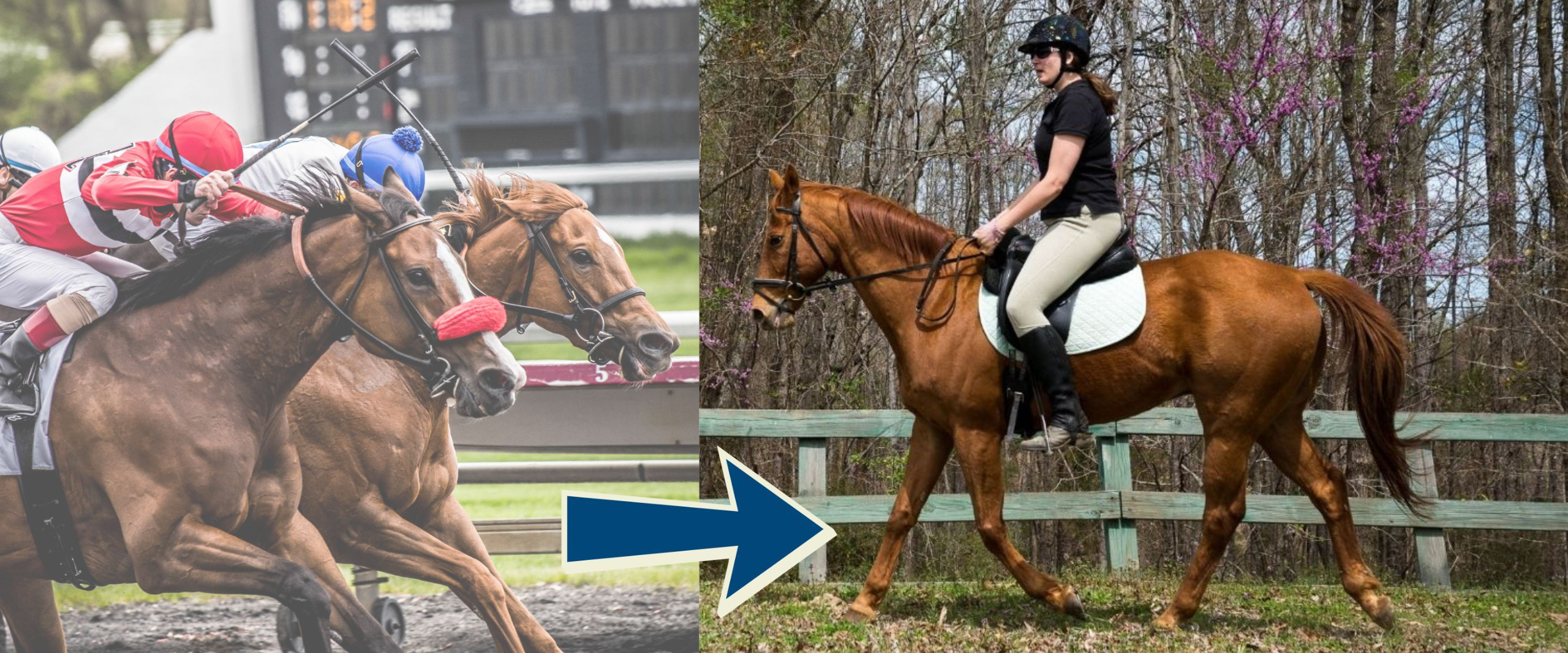
The Race-2-Ride curriculum is an evidence-based retraining program developed specifically for off-the-track (OTT) horses. Unlike traditional methods, this program acknowledges the OTT's unique history and utilises learning theory to create a "Blank Canvas" for a successful second career.
The Five Foundational Components
To ensure safety and welfare across all training environments, the program is governed by five core components:
-
The Engagement Zone: Training occurs only when the horse is relaxed and attentive. Any sign of anxiety, such as head-raising or rushing, is a signal to return to a previous step.
-
The "Spot and Direction" Clarity: Lessons are simplified by moving one specific part of the horse (The Spot) in one specific direction (The Direction).
-
The "Perfectly-Timed" Release: Rein or other pressure is removed instantly the moment the horse offers the correct response. This clear release marks the behaviour and accelerates learning.
-
Signal Priming: Every signal begins with the lightest possible cue (voice or body language). We begin with a sufficient signal to motivate change and constantly work towards decreasing amounts of pressure and aim for self-carriage.
-
The Two-Question Test: Before progressing, trainers must answer: 1. Can I ride it? (Are the responses consistent?) and 2. Do I want to ride it? (Is the horse relaxed?)
While the ISES 10 Principles of Training underpin all of our training, the Race-2-Ride program focuses on these 5 Foundational Components to address the unique psychological and physical needs of the transitioning racehorse.
Curriculum Structure
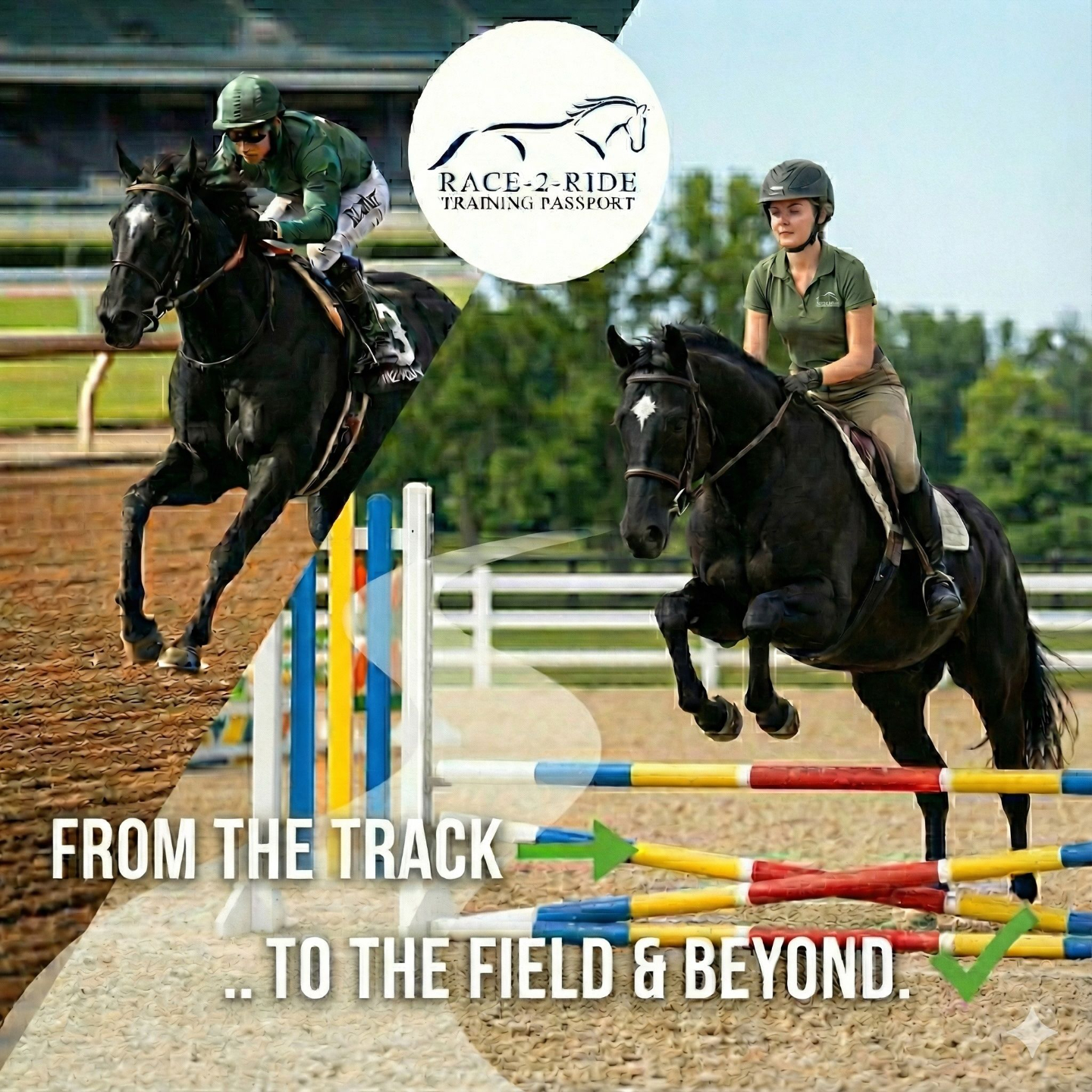
The program is divided into twelve progressive modules, monitored via a Traffic Light System to ensure objective progress.
Phase I: Foundation and Groundwork
-
Module 1: Welcome: Introduction to the training philosophy and safety protocols
-
Module 2: Engagement and Relaxation: Establishing the use of combined reinforcement (pressure-release-reward)
-
Module 3: Moving the Shoulders: Precise directional control and front-end elevation
-
Phase II: The Bridge to Ridden Work
-
Module 5: Long-Reining: Developing gait, transitions and self-carriage from the ground
-
Module 6: Short-Reining: The "Mental Ride." Perfecting verbal cues from the shoulder to mimic ridden signals
-
Module 7: Hips to the Fence: Teaching voluntary presentation at the mounting block, ensuring the horse stands quietly for mounting
-
Phase III: Under Saddle and Beyond
-
Module 9: The First Few Rides: Transferring ground success to the saddle with a focus on relaxation and staying in the 'bubble'
-
Module 10: Hindquarter Control: Isolating the hindquarters to facilitate lateral movements and balanced canter transitions
-
Module 11: Trailer Loading: Using shaping and habituation to create a calm and confident loading response every time
-
Module 12: The Canter: Regulating tempo and emotional balance in high-arousal gaits
The Traffic Light System
Objective behavioural markers measure progress. A lesson is considered "confirmed" when the horse demonstrates Green Light behaviour for three consecutive sessions.
-
🟢 Green (Proceed): The horse is in the Engagement Zone and responding to light signals.
-
🟡 Orange (Refine): The horse is distracted or showing mild conflict behaviours; return to a simpler step.
-
🔴 Red (Backtrack): The horse is over-aroused or showing conflict behaviour; immediate return to a familiar lesson.
Resources and Digital Support
To support global implementation, the program includes:
-
Race-2-Ride Mobile App: For on-site course access and video demonstrations
-
Resource Library: Detailed downloads on evidence-based training
-
Community Hub: A peer-support network for trainers and riders