Race-2-Ride Training Passport
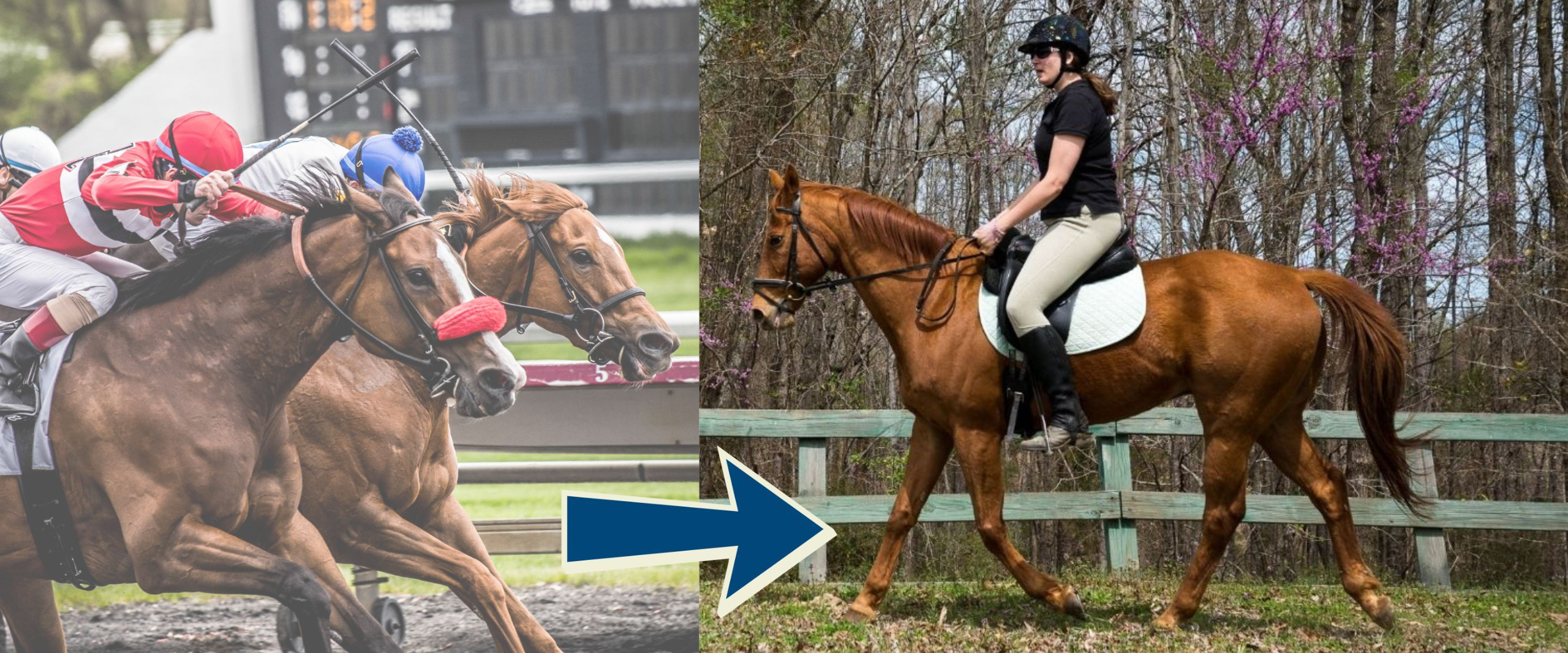
A National Framework for Racehorse Transitioning
The Race-2-Ride curriculum is an evidence-based retraining program developed specifically for off-the-track (OTT) horses. Unlike traditional methods, this program acknowledges the OTT's unique history and utilises learning theory to create a "Blank Canvas" for a successful second career.
The Five Foundational Components
To ensure safety and welfare across all training environments, the program is governed by five core components:
-
The Engagement Zone: Training occurs only when the horse is relaxed and attentive. Any sign of anxiety, such as head-raising or rushing, is a signal to return to a previous step.
-
The "Spot and Direction" Clarity: Lessons are simplified by moving one specific part of the horse (The Spot) in one specific direction (The Direction).
-
The "Perfectly-Timed" Release: Rein or other pressure is removed instantly the moment the horse offers the correct response. This clear release marks the behaviour and accelerates learning.
-
Signal Priming: Every signal begins with the lightest possible cue (voice or body language). We begin with a sufficient signal to motivate change and constantly work towards decreasing amounts of pressure and aim for self-carriage.
-
The Two-Question Test: Before progressing, trainers must answer: 1. Can I ride it? (Are the responses consistent?) and 2. Do I want to ride it? (Is the horse relaxed?)
While the ISES 10 Principles of Training underpin all of our training, the Race-2-Ride program focuses on these 5 Foundational Components to address the unique psychological and physical needs of the transitioning racehorse.
Curriculum Structure
The program is divided into twelve progressive modules, monitored via a Traffic Light System to ensure objective progress.
Phase I: Foundation and Groundwork
-
Module 1: Welcome: Introduction to the training philosophy and safety protocols
-
Module 2: Engagement and Relaxation: Establishing the use of combined reinforcement (pressure-release-reward)
-
Module 3: Moving the Shoulders: Precise directional control and front-end elevation
-
Phase II: The Bridge to Ridden Work
-
Module 5: Long-Reining: Developing gait, transitions and self-carriage from the ground
-
Module 6: Short-Reining: The "Mental Ride." Perfecting verbal cues from the shoulder to mimic ridden signals
-
Module 7: Hips to the Fence: Teaching voluntary presentation at the mounting block, ensuring the horse stands quietly for mounting
-
Phase III: Under Saddle and Beyond
-
Module 9: The First Few Rides: Transferring ground success to the saddle with a focus on relaxation and staying in the 'bubble'
-
Module 10: Hindquarter Control: Isolating the hindquarters to facilitate lateral movements and balanced canter transitions
-
Module 11: Trailer Loading: Using shaping and habituation to create a calm and confident loading response every time
-
Module 12: The Canter: Regulating tempo and emotional balance in high-arousal gaits
The Traffic Light System
Objective behavioural markers measure progress. A lesson is considered "confirmed" when the horse demonstrates Green Light behaviour for three consecutive sessions.
-
🟢 Green (Proceed): The horse is in the Engagement Zone and responding to light signals.
-
🟡 Orange (Refine): The horse is distracted or showing mild conflict behaviours; return to a simpler step.
-
🔴 Red (Backtrack): The horse is over-aroused or showing conflict behaviour; immediate return to a familiar lesson.

Resources and Digital Support
To support national implementation, the program includes:
-
Race-2-Ride Mobile App: For on-site course access and video demonstrations
-
Resource Library: Detailed downloads on evidence-based training
-
Community Hub: A peer-support network for trainers and riders
Race-2-Ride: The Five Pillars
Pillar 1: Whole-of-Life Commitment
The program operates on the principle: "If Racing Registers You, Racing Supports You — For Life".
-
100% Coverage: Every horse named in the Australian Stud Book is supported, including the 34% that never race and currently fall through the cracks.
-
Closing the Support Gap: It specifically protects the "unraced" cohort, approximately 3,500–4,000 horses annually, that are bred by the industry but currently receive zero structured support.
Pillar 2: Evidence-Based Training (The Science)
The curriculum is grounded in Equitation Science and the International Society for Equitation Science (ISES) principles.
-
Cognitive Welfare: Using methods grounded in learning theory, the program aids with a smooth psychological transition from the track to a second career.
-
Safety First: It focuses on humane, non-strength-based training methods that prioritise relaxation and clear communication.
-
Expert-Led Guidance: Owners have direct access to evidence-based resources and weekly Q&A sessions to address specific behavioural challenges.
Pillar 3: The Human-Horse Bond
This pillar focuses on the specific needs of the people taking these horses on to ensure a successful, safe partnership.
-
Demographic Alignment: The training is tailored for the 90% of recreational owners who are female and cannot (or should not) rely on physical strength to manage an off-the-track.
-
Empowering Novice Owners: It provides a structured support system for second-career owners, many of whom are novices, equipping them with the expertise to provide optimal care.
-
Community Support: Owners gain access to a national network and local "community hubs," reducing the isolation often felt when managing a "challenging" off-the-track horse.
Pillar 4: Sustainable Financial Logic
The program is designed to be a self-funding asset that creates a "pre-paid" welfare net for the horse.
-
Lifetime Care Investment: A nominal fee ($200–$1,000) is collected at the point of registration, when investment capital is highest, representing as little as 0.10% of the cost to get a horse to its first race.
-
Solving the "Cash-Strapped" Problem: By pre-paying for support at the start, the horse remains well-supported even if subsequent owners have limited financial resources.
-
Self-Sustaining Model: The program is revenue-positive from day one, generating a surplus that can be reinvested in additional welfare initiatives without requiring government or industry grants.
Pillar 5: Institutional Legacy & Transfer
This pillar ensures that the welfare system becomes a permanent part of the Australian racing landscape.
-
Turnkey Transition: Kate Fenner will build and deliver the platform, then systematically transfer 100% of the IP and operational control to the industry over a five-year period.
-
National Scaling: Following a successful pilot, the program is designed for national adoption, positioning the industry as a proactive leader in welfare for the off-the-track horse.
-
Strategic Outcome: While the goal is horse and human welfare, this proactive commitment naturally addresses the public's core concerns about "abandonment," thereby helping to safeguard the industry's future.