
Building Confidence - Yours and Theirs
Jan 17, 2026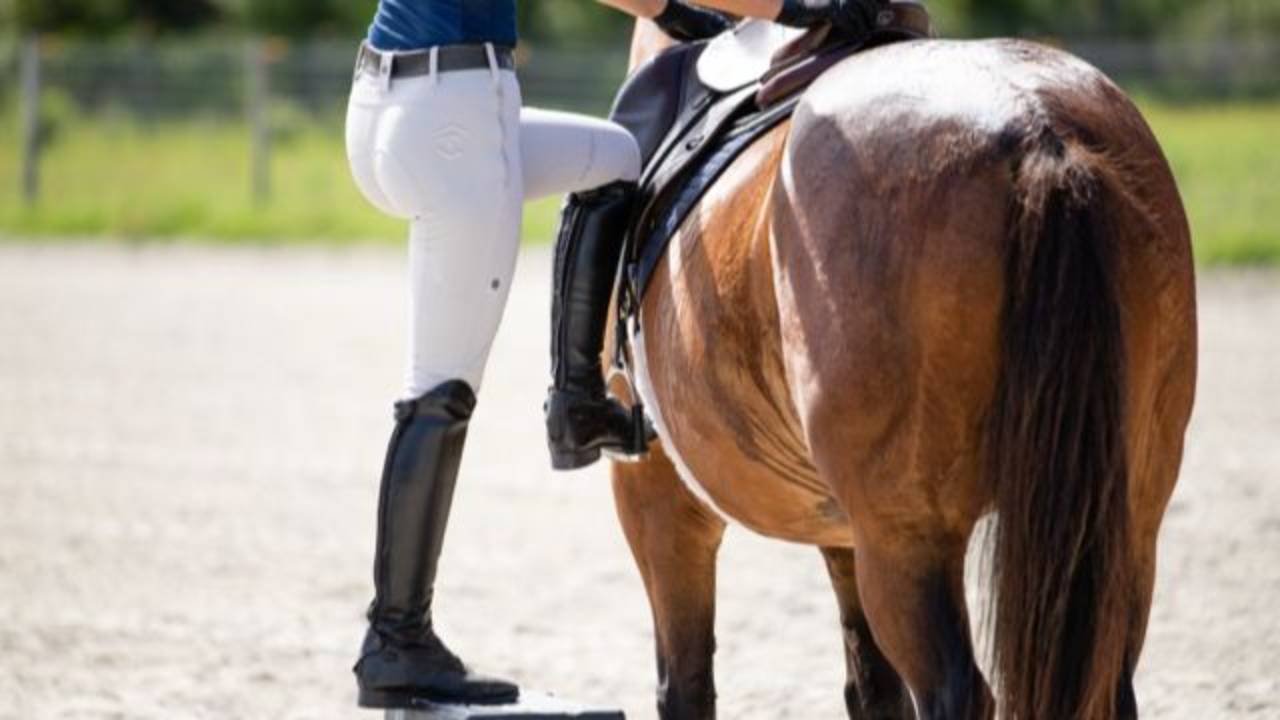
Small Wins, Big Transformations
Confidence isn't built in dramatic breakthroughs or brave leaps. It's built on tiny, almost invisible wins that repeat consistently over time. Yet many OTT owners set goals that guarantee failure: expectations too high, timelines too short, and success defined by someone else's horse's achievements.
The result? Eroded confidence on both sides of the partnership. Your horse experiences frequent failure, anxiety, and confusion. You experience frustration, self-doubt, and the creeping feeling that maybe you're not the right person for this horse.
Here's the truth: you probably are the right person. You're just using the wrong success metrics.
The 80% Success Rule
At Kandoo Equine, we talk about setting horses up for success by working at 80% of their current capability. This isn't being "too soft" or having low expectations - it's strategic training that builds confidence through achievable challenges.
Here's how it works: If your horse can stand still at the mounting block for 10 seconds before getting restless, practice 8-second stands and reward heartily. Success rate: 90%. Confidence builds.
Contrast this with pushing for 30-second stands: Success rate: 20%. Frustration builds.
The mathematics of confidence is simple:
-
High success rate = positive emotional associations + willingness to trial responses + confidence growth
-
Low success rate = negative emotional associations + reluctance to trial responses + confidence erosion
Research on animal learning consistently shows that high rates of reinforcement (which require achievable criteria) produce faster, more reliable learning than difficult tasks with low reinforcement rates.
Yet we regularly set criteria our horses can't reliably achieve, then wonder why progress is slow, and conflict develops. The problem isn't the horse's ability - it's the human's criterion setting.
How Your Confidence Affects Theirs
Horses are prey animals with nervous systems exquisitely tuned to read emotional states in their environment. When you're anxious, your horse knows.
Your anxiety shows up as:
-
Shallow, rapid breathing
-
Muscle tension, especially in the hands, legs, and seat
-
Inconsistent signals (tense muscles give conflicting signals)
-
Holding your breath during "scary" moments
-
Shortened attention span and reduced awareness
Your horse feels all of this through your body and may interpret it as: "My human is worried. I should be worried too."
This creates a feedback loop: You're nervous about your horse spooking, so you tense up. Your horse feels your tension and becomes more reactive. Their reactivity confirms your worry. You tense more. They react more.
Breaking this cycle requires working on your confidence alongside theirs. This isn't secondary to training - it IS training.
Practical Confidence-Building Strategies
For Your Horse:
-
Set criteria at 80% of current ability - If they can do it 8 out of 10 times, it's appropriate difficulty
-
Break complex tasks into micro-steps - Don't ask for "canter a full circle." Ask for "canter 3 strides, return to trot, repeat" (we'll talk about bookending later, but be sure you signal for a return to trot!)
-
Reward frequently using combined reinforcement - Every correct response receives a release (negative reinforcement) and earns voice praise, and/or a scratch or other form of positive reinforcement
-
End sessions before deterioration - Finish while they're still succeeding, not after they've become frustrated
-
Measure progress against yesterday, not against other horses - Your horse's timeline is unique
For Yourself:
-
Conscious breathing - Practice 4-count inhale, 6-count exhale (longer exhale activates parasympathetic nervous system)
-
Narrate observations - "My horse's ears are forward. They're curious, not scared" (grounds you in facts, not fears)
-
Plan before you ride - "Today we're practising halt-walk transitions. That's all." (clear goals reduce anxiety)
-
End early when needed - Finishing a 15-minute session on a good note builds more confidence than struggling through 45 minutes
-
Celebrate micro-wins - Notice and acknowledge every small improvement
The Comparison Trap
One of the fastest ways to destroy confidence is comparing your OTT's progress to:
-
Your friend's quiet warmblood who's been in full work for 5 years
-
Instagram horses with professional training
-
Your previous horse, who had a different history and needs
-
Some imaginary timeline of how fast progress "should" happen
These comparisons are meaningless. Your horse has a unique history, a unique nervous system response, and unique strengths and challenges. Their timeline is theirs alone.
The only relevant comparison is: How does your horse today compare to your horse last month?
That's it. That's the only metric that matters.
When Confidence Takes Hits
Even with careful planning, setbacks will occur. Your horse spooks when they've been calm for weeks. You fall off. Something goes unexpectedly wrong. Confidence drops.
This is normal. It's not failure - it's part of the process.
Recovery from confidence hits requires:
-
Acknowledgement without catastrophizing - "That was scary, but we're both okay" rather than "I can't do this"
-
Return to known success - Go back to something you both do well
-
Gradual re-approach - Don't avoid the challenge forever, but approach it more carefully next time
-
Support from people who understand - Talk to others who've been through it (this is what your Race-2-Ride Community is there for)
-
Patience with the timeline - Confidence rebuilds slower than it breaks
The Role of Nervous System Regulation
Both you and your horse need skills in nervous system management. When stress levels rise, learning shuts down. This isn't weakness - it's biology.
Signs you need a nervous system reset:
-
Holding your breath
-
Tight jaw or shoulders
-
Racing thoughts
-
Inability to focus
-
Frustration or anger
Signs your horse needs a reset:
-
Elevated breathing that doesn't settle
- Prolonged elevated head carriage
-
Tight muscles through neck and back
-
Inability to stand still, even briefly
-
Not responding to familiar cues
-
Showing stress signals at Level 4+ (see the Engagement Zone training)
When you notice these signs, stop whatever you're doing and help both nervous systems downregulate:
-
Walk on loose rein
-
Deep breathing (you)
-
Calm voice
-
Hand on neck (calming pressure)
-
Return to a familiar, easy task
Key Takeaways
-
Confidence builds through high success rates (80% rule)
-
Your anxiety directly impacts your horse's confidence
-
Comparison to other horses destroys progress measurement
-
Small wins repeated consistently create transformation
-
Nervous system regulation is a prerequisite for learning
-
Patience isn't passive - it's the most active training choice you can make
Building confidence with your OTT takes time. Trust the process. Trust the small wins. Trust that 8 seconds of calm standing today becomes 30 seconds in a month, and 30 seconds in a month becomes a solid mounting block behaviour in three months.
This is how confidence is actually built - not through dramatic breakthroughs, but through patient accumulation of successes that prove to both of you: "We can do this. Together."
Ready to learn evidence-based methods for retraining your OTT through every stage of their journey? Join Race-2-Ride for lifetime support.