Mastering OTT Relaxation
Part 1: The Theory (4 mins)
Part 2: The Practical Exercise (9 mins)
Teaching Give to the Bit: The Theory
The "Give to the Bit" lesson is a foundational exercise that goes far beyond just "looking good" in a frame. It is the first step in shifting a horse from being a passenger to an engaged partner.
1. Physical Balance and Self-Carriage
-
Natural Weight Distribution: By nature, horses carry about 60% of their weight on their forehand. Adding a rider increases this load on their shoulders.
-
Shifting the Centre of Gravity: To jump or perform athletic movements, the horse must learn to elevate their shoulders and bring their hindquarters underneath them.
-
Lifting the Back: When a horse's head is too high, their back becomes hollow (common in racehorses). Asking for a slight drop in the head helps the horse round their spine and lift their back, creating a stronger bridge for the rider.
2. Mental Focus and the "Engagement Zone"
-
Gaining Attention: This exercise acts as a mental "reset," helping the horse focus on the rider rather than their surroundings.
-
The Engagement Zone: It is not about a dressage "frame"; it is about keeping the horse interested and responsive to your signals.
-
Relaxation: Teaching a horse to give to the bit encourages them to relax and stay calm under saddle or on the ground.
3. Establishing a Communication Language
-
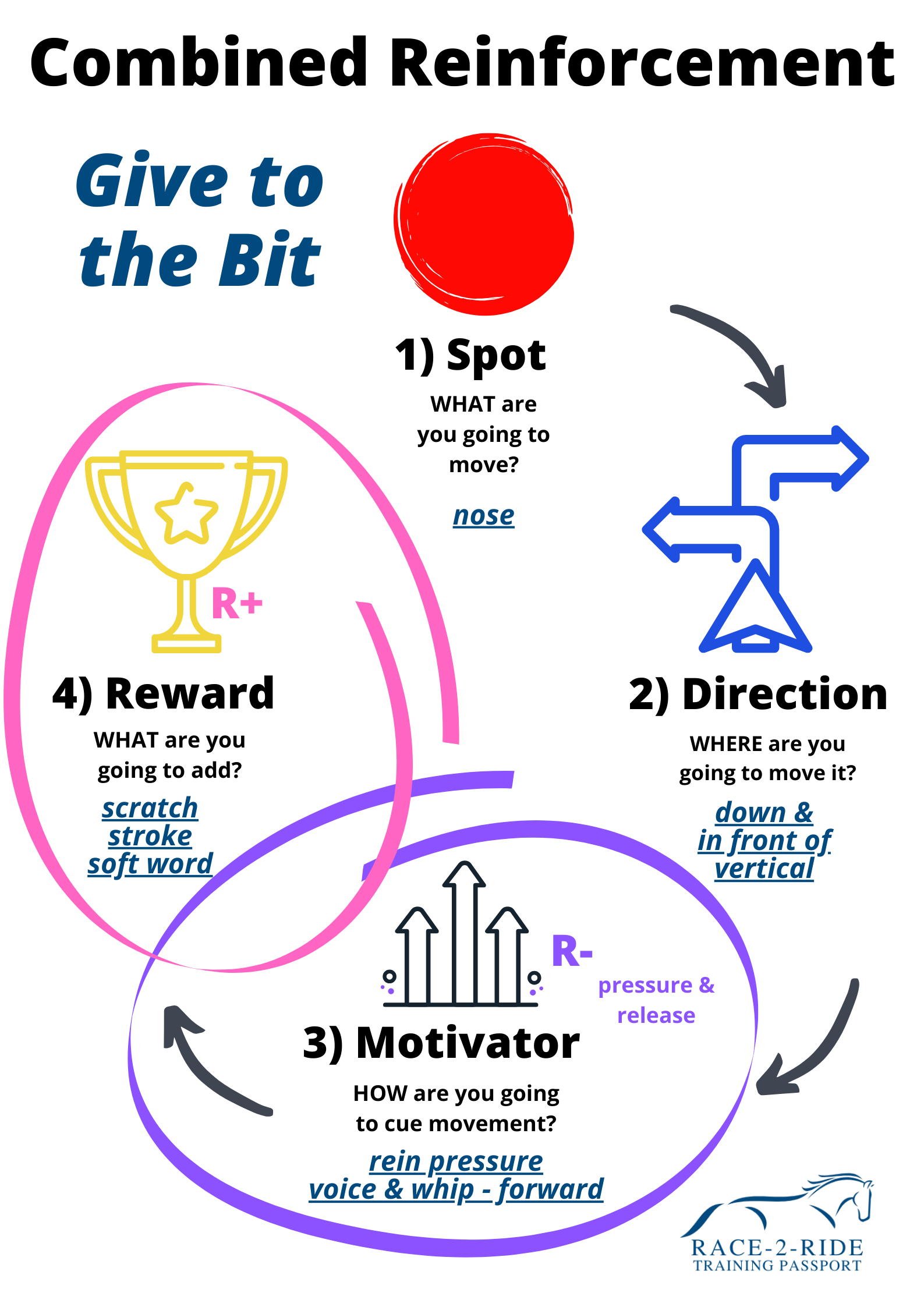
Combined Reinforcement: The horse learns through a clear cycle: they feel pressure, they respond with movement, the pressure is released, and the behaviour is rewarded.
-
Light Signals: This lesson teaches the horse to respond to very light pressure cues - whether that is the rein, leg, seat, or even proximity during groundwork.
-
The Foundation: Once a horse understands how to respond to light pressure and engage their brain with you, every subsequent lesson becomes easier to teach.
Teaching Give to the Bit: The Practice
This lesson introduces the "Give to the Bit" exercise using a structured framework known as Spot-Direction-Motivator-Reward (SDMR). By breaking the training down into these five components, you create a clear and consistent communication channel with your horse.
The SDMR Framework for this Lesson
-
Spot: The specific part of the horse we are focusing on is the nose (or the nostril on the side you are working)
-
Direction: We want the nose to move down and slightly inward toward the chest
-
Motivator: We use light rein tension as the pressure signal
-
Reward: Once the horse responds, provide a scratch on the wither and verbal praise (e.g., "Good boy")
-
Release: This is the most critical part of negative reinforcement - you must instantly release the rein pressure the moment the horse gives
Handling and Safety Position
-
The "Safety Elbow": Stand near the horse’s shoulder. Keep your elbow firm and slightly raised; if the horse jumps toward you or brings their head too far around, they will run into your elbow rather than your body or face.
-
The Rein Angle: Hold the rein at the same angle it would be if you were riding. This ensures the groundwork translates directly to under-saddle work.
-
Walking Forward: It is often easier to teach this at a walk rather than at a standstill. Movement helps "off-the-track" horses focus and prevents them from simply bracing against the bit. The horse must keep moving forward; use a dressage whip as a gentle guide if they try to back up.
Key Training Tips
-
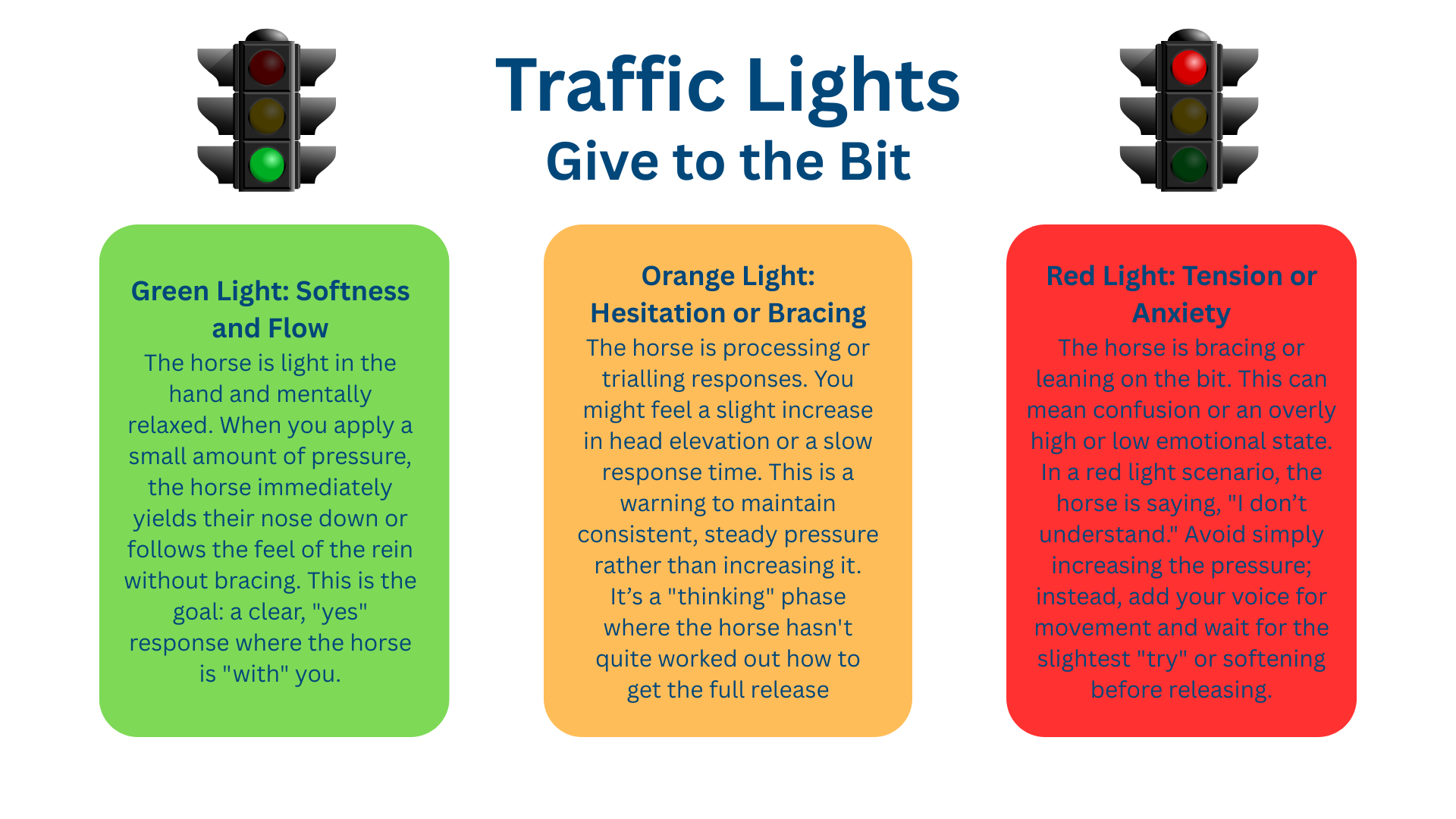
Be Consistent: The horse may try moving their nose in several wrong directions before finding the one you want. Apply steady pressure without "sawing" or "giving and taking" until they give in the correct direction.
-
Layering Signals: If the horse braces against the rein, you can increase the "motivation" by adding your voice rather than just pulling harder.
-
Building Confidence: When a horse knows that giving to pressure leads to a release and reward, they become confident and will actively "look for the answer" when they feel a new cue.
-
The "Bubble": When the horse is "round" and giving to the bit, they are in the Engagement Zone. This leads to a relaxed, focused horse that is safer to handle.